
When the price is the only argument
FastestVPN advertises a lifetime plan for less than most providers charge for twelve months. That is the product’s entire proposition, and it is heavily marketed on deal sites and in South Asia and the Gulf, where dollar-priced subscriptions are a real burden and a one-off payment is attractive.
We take that seriously. Our cheap VPN page exists because price is a legitimate constraint and pretending otherwise is a luxury. But a VPN is a company you route your traffic through, and the questions that matter about a company are the ones this one does not answer.
The ownership question, and why it is disqualifying
FastestVPN associates itself with a Cayman Islands entity. Its App Store listing names an Australian company, FASTEST TECHNOLOGY PTY LTD. We looked at both and cannot reconcile them, and the company does not explain the relationship anywhere.
No individuals are named. There is no leadership page, no founder, no named security or engineering lead. There is a privacy policy and a support address.
Compare that to what our ownership explorer records for other providers. We can tell you that Kape Technologies owns ExpressVPN, CyberGhost and Private Internet Access, and also owns three of the largest VPN review sites, which is a serious conflict and one we criticise at length. But we can tell you. The disclosure exists, and readers can weigh it.
Here there is nothing to weigh. A no-logs promise from a company whose identity is unestablished is not a weak assurance; it is not an assurance at all, because there is nobody identifiable making it.
What the users say
The iPhone app’s App Store rating sits far below every established provider in our catalogue, across several hundred ratings. That is not a marginal difference of a few tenths. It is a gap that separates it from the entire field.
Our iPhone rankings are built by analysing App Store review text, and we publish a score only when Apple’s feed returns a large enough sample to mean something, currently a minimum of forty reviews. At the last collection this app had not reached that threshold, so we are reporting the aggregate rating rather than our own analysis. When the sample is large enough, a full panel will appear here.
The aggregate alone is worth taking seriously. It is the only substantial body of independent evidence available about this product, since no auditor has examined it and no laboratory has tested it.
The lifetime plan, examined
| Plan | Price | Renewal | True cost per month over 3 years |
|---|---|---|---|
| Monthly | $10.00 | $10.00 | $10.00 |
| 1 year | $39.95 | not published | unconfirmed |
| Lifetime | about $40.00 | none | under $1.00 |
A lifetime plan has a structural problem worth naming, and it is not unique to this provider.
Recurring subscriptions fund recurring costs. Servers, bandwidth and staff are monthly expenses. A company that takes forty dollars once and then serves a customer for a decade is either relying on most buyers abandoning the service, or under-provisioning, or both. The pricing assumes churn.
That is why lifetime VPN deals are viewed with suspicion by people who have watched this industry, and why no provider with an audit and a reputation to protect sells one.
Features, and the important absence
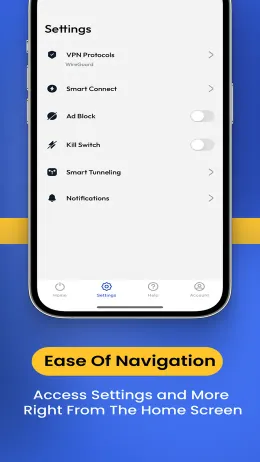
Fifteen simultaneous connections, which is generous. WireGuard, OpenVPN and IKEv2. Split tunnelling. Ad blocking. Around 60 countries claimed. Router and television support. Cryptocurrency accepted.
No obfuscated transport. This is the omission that matters most, because the countries where people are most attracted to a cheap lifetime VPN are frequently the countries that inspect traffic. Our pages on Pakistan, Egypt and Bangladesh all list it among providers to avoid, and the reason is the same in each case: it is marketed hard in those markets and it does not work in them.
Streaming is weak. BBC iPlayer and Hulu do not work, and Netflix is inconsistent.
What we would buy instead
If the constraint is genuinely money, hide.me has a Securitum no-logs audit, an obfuscated option, port forwarding, a free tier requiring no account, and a long plan around $2.70 a month. Surfshark costs a little more, has audits, obfuscation and unlimited devices.
Neither is free. Both are cheap. The difference between them and a lifetime deal is a few dollars a year, and what those dollars buy is a company that can be identified and a claim that has been checked.
Where it lands
FastestVPN appears on our not recommended list. Not because it is the worst software here, and not because cheap is wrong, but because the questions this site exists to ask all return nothing.
What we have not tested
We have not run our own speed, leak or censorship tests on FastestVPN. Nothing on this page reports a measurement we did not make, and the criticisms above rest on disclosure, structure and public user ratings rather than on performance figures we do not have.