vpnandprivacy

encrypted email provider review · 2026

Proton Mail review: the default choice, and the limits nobody prints

Swiss, non-profit-controlled, and the default answer for most people leaving Gmail.

78
Good · #1 of 6 encrypted email
By The VPN and Privacy team Updated 6 Sept 2026 Facts re-checked 6 Sept 2026
Runs on iOS Android Mac Windows Linux Router Browser TV
JurisdictionSwitzerland
Intelligence allianceOutside the alliances
No-logs auditNone — apps audited by Securitum, 2024
Founded2014
Ultimate owner Proton Foundation Switzerland · Outside the alliances
Operates Proton Mail Proton AG
Proton VPNProton PassProton DriveSimpleLogin
Sibling brands share the same ultimate owner as Proton Mail.

Controlled by the Swiss non-profit Proton Foundation since 2024, the only ownership change in this market that moved away from investors. Proton has published transparency reports and has contested Swiss legal orders in court, losing at least one — a 2021 case in which it was compelled to log an activist account IP address, which it disclosed.

Public-source facts, not yet checked against primary documents. How we verify.

Lab test pending: score uses public, checkable data only. How we verify.

Verdict

Proton Mail is the default answer for most people leaving Gmail, and it earns that with zero-access storage, Swiss non-profit control, open-source clients audited by Securitum, and an ecosystem of calendar, drive, password manager and VPN on one account. Two limits deserve more prominence than the marketing gives them. In 2021 a Swiss legal order compelled it to log one account's IP address, which it did and then disclosed, and the end-to-end encryption that protects Proton-to-Proton mail does not extend to messages you send to a Gmail address unless the recipient uses OpenPGP.

Best for

Anyone leaving Gmail who wants a mailbox their provider cannot read, plus an encrypted calendar and drive on the same account.

Not for

People who live in Thunderbird or Outlook on a free plan, and anyone who expects encryption to follow a message into someone else's inbox.

Visit Proton Mail Compare with Tuta Not an affiliate link. We earn nothing if you buy.
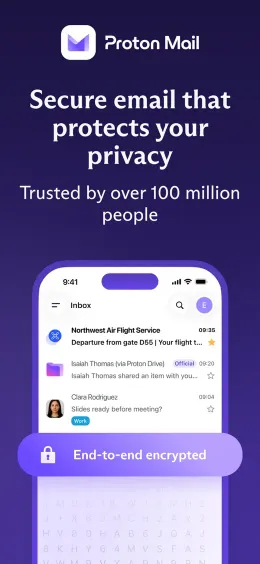
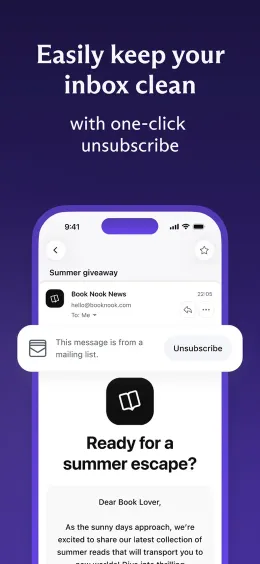
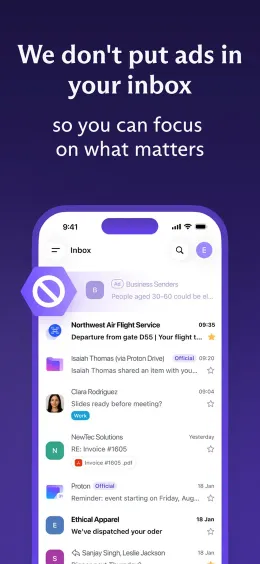
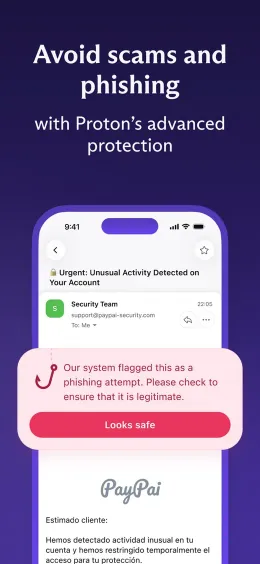
Proton Mail iPhone app, screen 1 of 4Proton Mail iPhone app, screen 2 of 4Proton Mail iPhone app, screen 3 of 4Proton Mail iPhone app, screen 4 of 4
Proton Mail's current iPhone app, as listed on the App Store. Screenshots are the developer's; we reproduce them to identify the product.

Score breakdown

Privacy & trust
78
Price & renewal
74
Features
100
Streaming
0
Censorship bypass
0
App quality
64
Speed (our tests)
0
Support & refunds
52
Score by dimension Proton Mail: Privacy 78, Price 74, Features 100, Streaming 0, Censorship 0, Apps 64, Speed 0, Support 52. PrivacyPriceFeaturesStreamingCensorshipAppsSpeedSupport
All eight dimensions scored from checkable data or our own tests.

Weights: default profile. How the score works.

Pros

  • Swiss non-profit ownership, outside the intelligence alliances
  • Zero-access storage: Proton cannot read stored mail
  • Open-source clients audited by Securitum
  • Encrypted calendar, drive, password manager and VPN on one account
  • Accepts cash and cryptocurrency

Cons

  • IMAP and SMTP require the Bridge app, on paid plans only
  • A 2021 Swiss order compelled it to log an account IP address
  • Free tier is 1 GB
  • Search over encrypted mail is slower than Gmail

Pricing, including what it costs after renewal

PlanIntro totalPer monthRenewal totalTrue cost / mo over 3 years
Mail Plus · 12 months$47.88$3.99$71.88$5.32
Mail Plus · 24 months$71.76$2.99$143.76$4.49
Intro, per monthRenewal, per month
The longest intro deal renews at 2.0× its first-term monthly price. Prices in USD.

Free tier gives 1 GB and one address. IMAP and SMTP need the paid Bridge app on desktop, which is a real limitation if you live in Thunderbird or Outlook.

iOS app quality

App Store review analysis

50 most recent reviews across 1 storefronts, 2025-12-07 to 2026-09-04. Listing rating 4.75★ from 47,323 ratings. Version 7.11.5, released 2026-08-28.

64
Sentiment improving last 90 daysCritical complaints 38%
Privacy concerns
20%
Interface & usability
14%
Customer support
10%
Crashes & bugs
6%
iOS integration
6%
Ads / misleading
4%
Connection drops
2%
Billing & auto-renew
2%
  • ★☆☆☆☆ “You can view an All Mail tab but have to select it each time.” App Store reviewer, 2026-08-28
  • ★☆☆☆☆ “App and privacy is great except the search functionality makes the experience almost unbearable.” App Store reviewer, 2026-05-11
  • ★★☆☆☆ “Text you tap in goes awol at time.” App Store reviewer, 2026-03-18
  • ★★★★☆ “I absolutely love proton mail and the privacy and security it gives.” App Store reviewer, 2026-04-24
  • ★★★★☆ “They have improved a lot and their app is really good and secure.” App Store reviewer, 2026-03-09

Themes tagged by keyword rules; percentages are share of sampled reviews mentioning the theme. Method.

What it does, feature by feature

Feature Proton Mail
Platforms iOS, Android, Mac, Windows, Linux, Browser
End-to-end encryption
Zero-access storage
Open-source clients
Custom domain
Email aliases
IMAP / SMTP
Anonymous signup
Cash or crypto accepted
Usable free tier
Encrypted calendar

A question mark means we have not confirmed the feature, not that it is missing. Hover a feature name for what it means.

Why it is the default

If someone asks for one recommendation to replace Gmail, this is the answer, and it is not a close call.

Proton Mail combines zero-access storage, which means the provider holds mail it cannot read, with Swiss jurisdiction outside the intelligence alliances, open-source clients audited by Securitum in both 2023 and 2024, and an ecosystem that no other encrypted mail provider has built. One account carries mail, an encrypted calendar, encrypted storage, a password manager, alias services and Proton VPN. For most people leaving a big-tech provider, that breadth is what makes the switch survivable.

It also accepts cash and cryptocurrency, which matters to a small number of readers a great deal.

The rest of this review is about the parts the marketing is quieter on.

Ownership: the one that went the right way

Proton AG has been controlled by the Proton Foundation, a Swiss non-profit, since 2024.

Read our ownership explorer and the pattern across the privacy market is consolidation: independent brands acquired by holding groups, sometimes alongside the review sites that rank them. Proton moved in the opposite direction, placing control in a foundation rather than with investors who eventually need an exit. That does not make the company incorruptible, but it removes the specific mechanism by which privacy products usually decay.

The 2021 case, and what it proves

In 2021 a Swiss legal order compelled Proton to begin logging the IP address of one account belonging to an activist. Proton complied, and the fact became public through the case. The company has contested Swiss orders in court and has lost at least this one.

Most coverage of this reads it as a scandal. We read it as the most useful piece of evidence in the category, because it draws the boundary exactly.

What could be compelled was prospective metadata: from the moment of the order, connection IP addresses for a named account. What could not be produced was the content of stored mail, because zero-access storage means Proton holds ciphertext it has no key for. A provider with a spotless record tells you only that nobody has tested it. Proton was tested, the encryption held where it was supposed to hold, and the metadata gap was exposed where it genuinely exists.

The practical lesson for a reader is that Swiss non-profit ownership does not put you outside the law, and that if connection metadata is part of your threat model you need to be behind a VPN or Tor when you connect, not merely using an encrypted mailbox.

The OpenPGP limit

Proton’s encryption is built on OpenPGP, and OpenPGP has an unavoidable property that the category’s advertising tends to skip.

Mail between two Proton users is end-to-end encrypted automatically, with no configuration. Mail to a Gmail, Outlook or corporate address is not, unless your recipient uses OpenPGP and you have imported their public key. Without that, your message leaves Proton’s boundary encrypted in transit and then sits in the recipient’s mailbox in a form their provider can read.

Proton’s workaround is a password-protected message, where the recipient gets a link and opens the content on Proton’s side using a secret you shared out of band. It works, it is genuinely useful, and it is not the same thing as encrypted email, because the message never travels to them encrypted at all.

None of this is a Proton failing. It is how email works, and it is why our encrypted email ranking treats zero-access storage rather than end-to-end encryption as the property that actually distinguishes these products.

What it costs

PlanIntroRenewalTrue cost per month over 3 years
Free$0$0$0
Mail Plus, 1 year$47.88$71.88about $5.32
Mail Plus, 2 years$71.76$143.76about $3.99

The three-year figures assume the introductory term followed by renewals at the published rate, with the two-year renewal pro-rated across the remaining twelve months. A 30-day money-back guarantee applies.

The renewal increase is substantial: Mail Plus goes from $47.88 to $71.88, a rise of half again. That is normal for this industry and it is still worth stating, because the price you see advertised is not the price you will mostly pay. Our true cost calculator exists for exactly this. Tuta is cheaper at every tier and does not raise its price at renewal, which is the single strongest argument for it.

The free tier gives 1 GB and one address. It is a real product rather than a demo, but 1 GB fills faster than people expect.

The iPhone app

Our App Store analysis used a sample of 50 recent reviews from the Great Britain storefront, against a listing rating of 4.75 stars from about 47,000 ratings.

Fifty is a small sample and we treat it accordingly. The sample mean was 3.32, well below the listing average, with sentiment improving between the older and more recent portions. The largest complaint theme by a distance was privacy concerns at 20 per cent of the sample, followed by interface and usability at 14 per cent and customer support at 10 per cent. Privacy complaints in reviews of a privacy product are usually about specific disappointments rather than a general judgement, and with a sample this size we would not draw conclusions from the proportion.

Where it lands

The strongest overall product in encrypted email, and the one we would put in front of someone who has never thought about their mailbox before. The ecosystem is the differentiator, the ownership structure is the best in the market, and the 2021 case is a feature of the evidence rather than a mark against it.

Choose Tuta instead if price and encryption thoroughness matter more than breadth, or Mailbox.org and Posteo if you need normal IMAP at a lower price and will manage PGP yourself.

What we have not tested

We have not run our own hands-on testing of Proton Mail’s apps, Bridge, or its search performance over encrypted mail. Our provider record flags ownership, jurisdiction and audit history as still needing a primary-source check, and the Securitum audit entries carry no published report URL on file. The App Store figures above are the only numbers here we generated ourselves, and they come from Apple’s public review feed rather than from testing.

Proton Mail against the top two encrypted email

Feature Proton MailTutaMailbox.org
Platforms iOS, Android, Mac, Windows, Linux, BrowseriOS, Android, Mac, Windows, Linux, BrowserBrowser
End-to-end encryption
Zero-access storage
Open-source clients
Custom domain
Email aliases
IMAP / SMTP
Anonymous signup
Cash or crypto accepted
Usable free tier
Encrypted calendar

A question mark means we have not confirmed the feature, not that it is missing. Hover a feature name for what it means.

Sources

2 sources · verification needs primary source check

Assembled from public sources; confirm ownership, jurisdiction and audit history against primary documents.

Frequently asked questions

Who owns Proton Mail?

Proton AG has been controlled by the Proton Foundation, a Swiss non-profit, since 2024. That is the only ownership change in this market that moved away from investors rather than towards them, and it is the opposite of the pattern our ownership explorer documents elsewhere, where independent brands are quietly absorbed by holding groups. Proton also operates Proton VPN, Proton Pass, Proton Drive and SimpleLogin under the same structure.

What happened in the 2021 Swiss case?

A Swiss legal order compelled Proton to begin logging the IP address of one account belonging to an activist, which it did, and the fact came out through the resulting case. Proton has contested Swiss orders in court and has lost at least this one. The case is genuinely useful because it maps the limit precisely: prospective metadata such as connection IP addresses can be compelled, while stored message content could not be produced, because zero-access storage means Proton holds a blob it cannot read.

Is mail I send to a Gmail address encrypted?

Not end to end, unless the recipient uses OpenPGP and you have their public key. Proton-to-Proton mail is end to end encrypted automatically. Mail to an ordinary provider is encrypted in transit and then sits readable in the recipient's mailbox, because their provider holds the keys. Proton offers password-protected messages as a workaround, which puts the message on Proton's side behind a shared secret rather than delivering it encrypted. This is a property of email itself, not a failing unique to Proton, but the marketing rarely spells it out.

What does zero-access storage actually mean?

Mail arriving in your mailbox is encrypted to your key before it is stored, so what Proton holds is ciphertext it cannot decrypt. The practical consequence is that a legal demand for your stored mail produces something unusable, which is exactly what the 2021 case demonstrated by contrast. The cost is that search over encrypted mail is slower than Gmail's, because the server cannot index content it cannot read.

Do I need the Bridge app?

You need Bridge for IMAP and SMTP on desktop, and Bridge requires a paid plan. If you want to keep using Thunderbird, Apple Mail or Outlook, that constraint should decide your shortlist before anything else does. Tuta removes IMAP entirely, while Mailbox.org and Posteo support it normally at lower prices, so the answer depends on whether the mail client or the encryption matters more to you.

How much does Proton Mail cost?

The free tier gives 1 GB and one address, which is usable but tight. Mail Plus is $47.88 for the first year and renews at $71.88, or $71.76 for two years renewing at $143.76. A 30-day money-back guarantee applies, and Proton accepts both cash and cryptocurrency, which very few providers of anything do.