vpnandprivacy

encrypted messenger review · 2026

Signal review: the strongest default, with two structural compromises

The protocol everyone else copied, run by a non-profit with nothing to sell.

71
Good · #4 of 8 encrypted messengers
By The VPN and Privacy team Updated 6 Sept 2026 Facts re-checked 6 Sept 2026
Runs on iOS Android Mac Windows Linux Router Browser TV
Ultimate ownerSignal Technology Foundation
Operating entitySignal Messenger LLC
JurisdictionUnited States
Intelligence allianceFive Eyes
No-logs auditNone — protocol audited by Independent third party, 2024
Founded2014

A US non-profit foundation, started with a $50M interest-free loan from Brian Acton after he left WhatsApp. It has no advertising, no investors to satisfy and no data to sell. Its subpoena responses are published and have repeatedly shown it holds almost nothing: an account creation date and a last-connection date.

Public-source facts, not yet checked against primary documents. How we verify.

Lab test pending: score uses public, checkable data only. How we verify.

Verdict

Signal is the correct default for almost everyone who wants private messaging, and the reason is evidence rather than marketing: the protocol it invented is the one competitors licensed, and its published subpoena responses show it holds an account creation date and a last-connection date and nothing else. The two compromises are structural and permanent. Registration still requires a phone number, and the servers are centralised in the United States, a Five Eyes country. Neither breaks the encryption; both shape who should use it.

Best for

Almost anyone replacing SMS or WhatsApp, journalists and their sources, and anyone who wants strong defaults without configuring anything.

Not for

People who cannot safely hand over a phone number at registration, and anyone who needs a service that survives being blocked at the network level.

Visit Signal Compare with Session Not an affiliate link. We earn nothing if you buy.
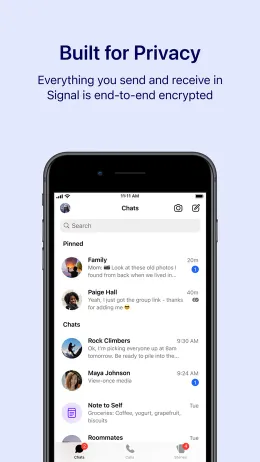
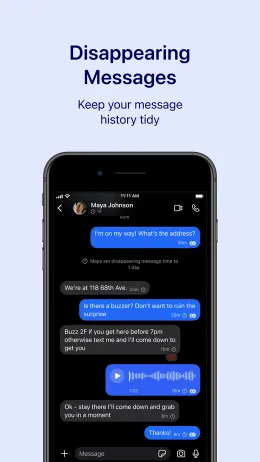
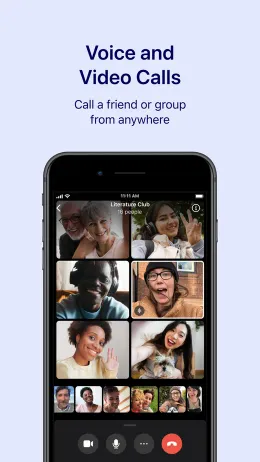
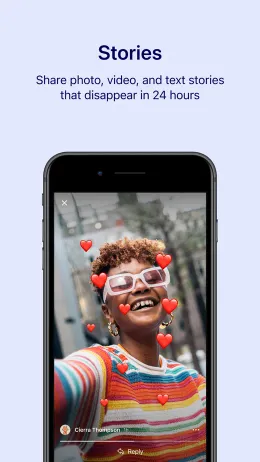
Signal iPhone app, screen 1 of 4Signal iPhone app, screen 2 of 4Signal iPhone app, screen 3 of 4Signal iPhone app, screen 4 of 4
Signal's current iPhone app, as listed on the App Store. Screenshots are the developer's; we reproduce them to identify the product.

Score breakdown

Privacy & trust
62
Price & renewal
100
Features
81
Streaming
0
Censorship bypass
0
App quality
74
Speed (our tests)
0
Support & refunds
55
Score by dimension Signal: Privacy 62, Price 100, Features 81, Streaming 0, Censorship 0, Apps 74, Speed 0, Support 55. PrivacyPriceFeaturesStreamingCensorshipAppsSpeedSupport
All eight dimensions scored from checkable data or our own tests.

Weights: default profile. How the score works.

Pros

  • The Signal Protocol is the reference standard and is used by WhatsApp and others under licence
  • Sealed sender hides who is messaging whom from Signal itself
  • Published subpoena responses show it holds almost no data
  • Non-profit with no advertising and no investors
  • Usernames mean you no longer have to reveal your number to contacts

Cons

  • A phone number is still required to register
  • Centralised servers in the United States
  • Backups on iOS are awkward compared with rivals
  • Not usable where the network blocks it without a proxy

Pricing, including what it costs after renewal

PlanIntro totalPer monthRenewal totalTrue cost / mo over 3 years
Intro, per monthRenewal, per month
Renewal price matches the intro price on every confirmed plan. Prices in USD.

Free. Funded by donations and the Signal Foundation endowment.

iOS app quality

App Store review analysis

150 most recent reviews across 2 storefronts, 2026-02-21 to 2026-09-04. Listing rating 4.74★ from 1,081,379 ratings. Version 8.27, released 2026-09-03.

74
Sentiment improving last 90 daysCritical complaints 16.7%
Billing & auto-renew
4.7%
iOS integration
4.7%
Privacy concerns
4%
Crashes & bugs
3.3%
Praised: speed
3.3%
Praised: reliability
3.3%
Slow speeds
2.7%
Customer support
2.7%
  • ★☆☆☆☆ “Thing keeps getting bugs and existing me out at the worst time.” App Store reviewer, 2026-09-03
  • ★☆☆☆☆ “Internet is nothing but a surveillance tool.” App Store reviewer, 2026-09-03
  • ★☆☆☆☆ “I’ve been using this platform to scam people get money from people” App Store reviewer, 2026-08-31
  • ★★★★★ “We use Signal the private messenger system because it's reliable.” App Store reviewer, 2026-08-30
  • ★★★★★ “I enjoyed using the signal app so fast and easy to use” App Store reviewer, 2026-08-30

Themes tagged by keyword rules; percentages are share of sampled reviews mentioning the theme. Method.

What it does, feature by feature

Feature Signal
Platforms iOS, Android, Mac, Windows, Linux
E2EE by default
Open source
Audited protocol
Minimal metadata
No phone number needed
Decentralised or federated
Disappearing messages
Encrypted voice and video
Encrypted backups

A question mark means we have not confirmed the feature, not that it is missing. Hover a feature name for what it means.

What the evidence actually shows

Most privacy claims in this catalogue are policies. Signal’s central claim is a court record.

Signal publishes the responses it has given to subpoenas, and what it has produced is the date an account was created and the date it last connected. Not messages, not contact lists, not group memberships, not who talked to whom. That is a far stronger form of proof than a privacy policy, because it is a description of what happened when a government asked, rather than a description of what a company intends.

Everything else in this review is context around that fact.

Ownership, and why the structure matters

Signal Messenger LLC sits under the Signal Technology Foundation, a United States non-profit. The foundation was capitalised by a large interest-free loan from a co-founder of WhatsApp, and it operates on donations and its endowment.

The structure is the point. Every other free messenger in wide use is either owned by an advertising company or funded by investors who will eventually want the product to make money, and messaging products that need to make money end up monetising the one asset they have, which is knowledge of who talks to whom. Signal has no such obligation, so the incentive that degrades its competitors does not exist here.

Our ownership explorer exists to make exactly this kind of structure visible across the privacy market, where independent branding usually conceals a shared parent.

The two compromises

A phone number is still required

You cannot create a Signal account without a phone number. Usernames, added recently, mean you no longer have to give that number to the people you message, which was a real and long-standing problem and is now largely solved. What remains is that the account itself is tied to a number, and in most countries a number is tied to identification documents.

For the overwhelming majority of readers this is irrelevant. For an activist in a country where the SIM register is a police tool, it is disqualifying, and the correct answer is a messenger with no identifier at all.

We say this plainly because most Signal coverage does not.

Centralised servers in a Five Eyes country

Signal is not federated and not decentralised. Traffic runs through infrastructure Signal operates, in the United States.

The confidentiality consequence is small, because the encryption is end to end and sealed sender removes the sender identity from what the server can see. The availability consequence is not small. A centralised service can be blocked at a national level, and Signal has been, which is why proxy support exists at all. If your requirement is a messenger that keeps working when the state switches things off, the answer is a peer-to-peer design, not this one.

What it costs

Signal is free, and there is no paid tier at all.

PlanIntroRenewalTrue cost per month over 3 years
Signal$0$0$0

The substantive question with a free product is who pays for it, because someone does. Here the answer is donations and the foundation’s endowment, seeded by that interest-free loan. Signal accepts cryptocurrency donations. It does not sell advertising, it has no investors to satisfy and it has no data business.

The honest risk is not hidden monetisation, it is sustainability: running a global messaging service on donations is expensive and the endowment is finite. That is a different worry from the one you have about a commercial messenger, and a better one to have.

Features, briefly

End-to-end encryption on by default with no setting to get wrong. Encrypted voice and video calls, including group calls. Disappearing messages. Encrypted backups. Usernames. Apps on iOS, Android, macOS, Windows and Linux. Open source throughout.

The feature set is deliberately narrower than Telegram’s, and that is a design position rather than an oversight. Signal will not add a server-side message archive, because the absence of one is the reason its subpoena responses are empty. Compare it directly with Telegram, where the feature-rich cloud model is exactly what makes ordinary chats readable by the operator.

The iPhone app

Our App Store analysis for this collection used a sample of 150 recent reviews from the United States and Great Britain storefronts, alongside a listing rating of 4.74 stars from roughly 1.08 million ratings.

A sample that size is small and skews negative, because people with a working app rarely write about it: the sample mean was 3.62 against that much higher listing average, and the honest reading is that the sample tells you about complaints, not about quality. The largest complaint themes were billing and auto-renew at about 5 per cent, iOS integration at about 5 per cent, privacy concerns at 4 per cent and crashes at 3 per cent. Billing complaints on a product with nothing to buy usually mean donation confusion, and we note it without weighting it heavily.

Where it lands

Signal is the default recommendation on this site for encrypted messaging, and it is not close. It combines the strongest published evidence, the reference protocol, sane defaults and enough users that you can actually reach people, which is the criterion most privacy comparisons forget.

The phone number requirement and the centralised United States infrastructure are real, and they are why we do not describe it as the most private messenger available, only as the right one for almost everybody.

What we have not tested

We have not done our own hands-on testing of Signal’s clients, and we have not independently verified its subpoena disclosures against court records. Our provider record flags ownership, jurisdiction and audit history as still needing a primary-source check, and the audit entries have no published report URL on file. Nothing here is a measurement we made.

Signal against the top two encrypted messengers

Feature SignalSessionSimpleX Chat
Platforms iOS, Android, Mac, Windows, LinuxiOS, Android, Mac, Windows, LinuxiOS, Android, Mac, Windows, Linux
E2EE by default
Open source
Audited protocol
Minimal metadata
No phone number needed
Decentralised or federated
Disappearing messages
Encrypted voice and video
Encrypted backups

A question mark means we have not confirmed the feature, not that it is missing. Hover a feature name for what it means.

Sources

1 sources · verification needs primary source check

Assembled from public sources; confirm ownership, jurisdiction and audit history against primary documents.

Frequently asked questions

Who owns Signal and how is it funded?

Signal Messenger LLC is operated by the Signal Technology Foundation, a United States non-profit. It was capitalised by a large interest-free loan from a co-founder of WhatsApp, and it runs on donations and that endowment. There are no investors expecting a return, no advertising and no data business, which removes the commercial pressure that eventually reshapes most free communication products.

Why does Signal still need a phone number?

Registration is bound to a phone number, which Signal uses for account identity and contact discovery. Usernames now mean you no longer have to reveal that number to the people you message, which fixes the social exposure, but it does not fix the underlying link between an account and a number that in most countries is registered against a legal identity. If that link is your threat model, Signal is the wrong tool and SimpleX, Threema or Session are the alternatives our [encrypted messenger ranking](/best/encrypted-messenger) covers.

Can Signal read my messages?

No. Message content is end-to-end encrypted by default with the protocol Signal itself designed, and there is no mode in which it is not. Sealed sender goes further by hiding from Signal's own servers who is sending a message to whom, so the operator does not accumulate a usable social graph. The published subpoena responses are the practical confirmation of this.

Is it a problem that Signal's servers are in the United States?

It is worth stating plainly rather than dismissing. The United States is a founding Five Eyes member with broad compulsion instruments, some of which restrict disclosure. The mitigation is that compulsion only produces what a company holds, and Signal has repeatedly demonstrated in court filings that it holds two dates. Centralisation also means the service can be blocked wholesale by a national network operator, which is a censorship problem rather than a confidentiality one.

Has the Signal Protocol been audited?

The protocol has had formal academic review in 2017 and further independent review in 2024, and it is the most examined messaging cryptography in existence, partly because other companies licensed it and had their own reasons to check it. Auditing is never a permanent certificate, and our record for Signal lists the reviews as public without a hosted report URL, which we treat as a small gap in the paper trail rather than a doubt about the protocol.

What are the practical annoyances?

Backups on iOS are awkward compared with rivals, which is the complaint people actually hit when moving to a new phone. Signal does not sync your history the way Telegram does, because there is no server-side copy of it to sync, and that is the direct cost of the design. Where a network blocks Signal, you need a proxy to use it at all.