vpnandprivacy

password manager review · 2026

Bitwarden review: the vault you are allowed to inspect

Open source, self-hostable, and the only free tier that is not crippled.

73
Good · #1 of 7 password managers
By The VPN and Privacy team Updated 6 Sept 2026 Facts re-checked 6 Sept 2026
Runs on iOS Android Mac Windows Linux Router Browser TV
Ultimate ownerBitwarden, Inc.
Operating entityBitwarden, Inc.
JurisdictionUnited States
Intelligence allianceFive Eyes
No-logs auditNone — apps audited by Cure53, 2025
Founded2016

Independent and US-incorporated. Took a $100M growth investment led by PSG in 2022, so there are outside investors, but no acquisition and no conglomerate parent. The client and server code is published, which is what makes the no-knowledge claim checkable rather than promised.

Public-source facts, not yet checked against primary documents. How we verify.

Lab test pending: score uses public, checkable data only. How we verify.

Verdict

Bitwarden publishes the code for its clients and its server, is audited by Cure53 every year, charges $10 a year for the paid tier, and offers the only free tier in the category that syncs unlimited passwords across unlimited devices instead of capping you into an upgrade. The reservations are real but narrow: it is incorporated in the United States and therefore inside the Five Eyes, it took a $100M growth investment in 2022 so there are outside investors, the interface is plainer than its rivals, and the 2024 argument over how its SDK was licensed showed that open source is a policy a company can change rather than a permanent property.

Best for

Almost everyone starting from nothing, people who want to read the code that guards their vault, and anyone who wants to run the server themselves.

Not for

Buyers who want the most polished apps, and anyone whose threat model rules out a United States company outright.

Visit Bitwarden Compare with Proton Pass Not an affiliate link. We earn nothing if you buy.
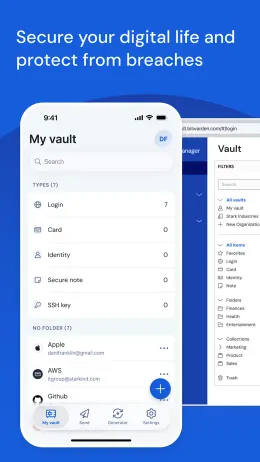
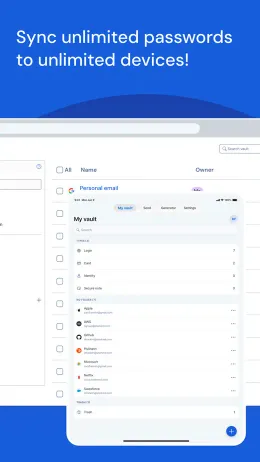
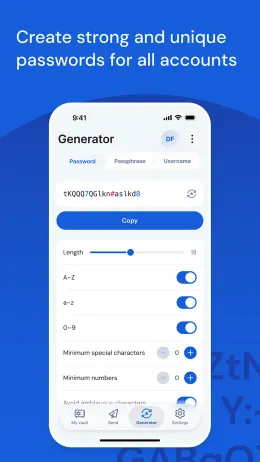
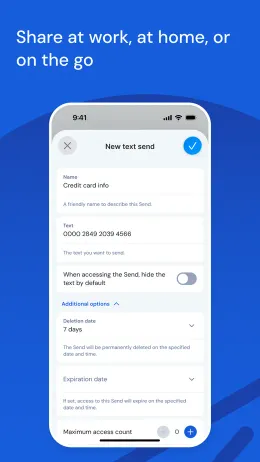
Bitwarden iPhone app, screen 1 of 4Bitwarden iPhone app, screen 2 of 4Bitwarden iPhone app, screen 3 of 4Bitwarden iPhone app, screen 4 of 4
Bitwarden's current iPhone app, as listed on the App Store. Screenshots are the developer's; we reproduce them to identify the product.

Score breakdown

Privacy & trust
52
Price & renewal
98
Features
100
Streaming
0
Censorship bypass
0
App quality
75
Speed (our tests)
0
Support & refunds
52
Score by dimension Bitwarden: Privacy 52, Price 98, Features 100, Streaming 0, Censorship 0, Apps 75, Speed 0, Support 52. PrivacyPriceFeaturesStreamingCensorshipAppsSpeedSupport
All eight dimensions scored from checkable data or our own tests.

Weights: default profile. How the score works.

Pros

  • Free tier syncs unlimited passwords across unlimited devices
  • All client and server code is open source
  • Can be self-hosted on your own machine
  • Annual third-party audits, published in full
  • Cheapest paid tier of any major manager at $10 a year

Cons

  • US jurisdiction, inside the Five Eyes
  • Interface is plainer than 1Password or Dashlane
  • Self-hosting is real work, not a checkbox
  • Outside investors since 2022

Pricing, including what it costs after renewal

PlanIntro totalPer monthRenewal totalTrue cost / mo over 3 years
Premium · 12 months$10.00$0.83$10.00$0.83
Families · 12 months$40.00$3.33$40.00$3.33
Intro, per monthRenewal, per month
Renewal price matches the intro price on every confirmed plan. Prices in USD.

Free tier syncs unlimited passwords across unlimited devices, which no other major manager offers. Premium adds file attachments, a built-in authenticator and emergency access.

iOS app quality

App Store review analysis

100 most recent reviews across 1 storefronts, 2020-06-12 to 2026-09-03. Listing rating 4.75★ from 31,601 ratings. Version 2026.8.1, released 2026-09-03.

75
Sentiment worsening last 90 daysCritical complaints 18%
Crashes & bugs
12%
iOS integration
10%
Praised: reliability
6%
Interface & usability
5%
Privacy concerns
3%
Praised: value
3%
Customer support
2%
Praised: speed
2%
  • ★☆☆☆☆ “Doesn’t let you sign in as it crashes on 2fa code screen.” App Store reviewer, 2026-01-03
  • ★☆☆☆☆ “Not syncing on iPad - update reinstallation fixed the issue” App Store reviewer, 2025-05-12
  • ★☆☆☆☆ “Its getting logged in again & again by hackers do not trust” App Store reviewer, 2025-04-14
  • ★★★★★ “Very easy to use and most importantly truly reliable 👍” App Store reviewer, 2026-02-25
  • ★★★★★ “i am using Bitwarden for some months and I feel it good.” App Store reviewer, 2025-01-07

Themes tagged by keyword rules; percentages are share of sampled reviews mentioning the theme. Method.

What it does, feature by feature

Feature Bitwarden
Platforms iOS, Android, Mac, Windows, Linux, Browser
Open source
Self-hostable
Passkeys
End-to-end encrypted
Usable free tier
Family plan
Emergency access
Breach monitoring
Secure sharing
Works offline
Browser extension

A question mark means we have not confirmed the feature, not that it is missing. Hover a feature name for what it means.

What it is, and what makes it different

Bitwarden is a password manager that publishes its source code, from the browser extension you install to the server that stores the encrypted blob. Everything in this category claims it cannot read your vault. Bitwarden is one of the few products where somebody outside the company can check.

It was founded in 2016, which makes it younger than 1Password and LastPass, and it arrived without the marketing budget of either. What it had instead was a free tier that did not treat free users as a funnel, and that is still the single most important thing about it.

Ownership and jurisdiction

Bitwarden, Inc. is independent, with no parent company and no private-equity owner. In this market that is genuinely rare. It is also incorporated in the United States, which places it inside the Five Eyes, and in 2022 it took a $100M growth investment led by PSG.

We do not treat the investment as disqualifying, and we do not pretend it is nothing. Growth capital at that size is not charity. It comes with an expectation of a return, which eventually means a sale or a listing, and the company that holds your vault in 2032 may not be governed the way the one that holds it today is. That is the honest shape of the risk, and it applies to every venture-backed manager, 1Password included.

The counterweight, and it is a real one, is that the code is public and the product is self-hostable. If the company changes character, the exit is not theoretical. That is not true of any closed-source alternative.

Audits

Cure53 has audited Bitwarden in 2023, 2024 and 2025, covering the applications and related components, and the reports are published rather than summarised. Annual, external, and readable is the standard the rest of the category should be held to, and most of it is not.

Audits are a snapshot of a codebase at a date, not a guarantee about the build you install next month. Combined with public source, though, they are the strongest available evidence for a claim that otherwise has to be taken on faith.

The licensing argument, stated plainly

In late 2024 Bitwarden introduced a software development kit component under a licence that restricted how it could be used, and because the desktop and browser clients came to depend on it, a large part of the community concluded that the clients were no longer meaningfully open source. The criticism was loud and specific, and it came from the exact users who had chosen the product for that property.

Bitwarden responded by restructuring the arrangement so the affected code moved to a licence the community accepted, and the dispute closed. We record it here because reviews that omit it are telling you a company has a property it in fact has a policy about. The outcome was good. The lesson is that open source is maintained by pressure, and the pressure worked because the code was public enough for anyone to notice.

What it costs

PlanIntroRenewalTrue cost per month over 3 years
Free$0$0$0
Premium (1 year)$10.00$10.00about $0.83
Families (1 year)$40.00$40.00about $3.33

There is no intro-then-renewal trick here. The renewal price equals the first-year price on both paid plans, so the three-year cost is simply three annual payments. Premium at roughly $0.83 a month over three years is a third of what Proton Pass Plus works out to and about a quarter of 1Password Individual. Our true cost calculator exists because most of this market does not price this way.

A 30-day money-back window applies, and cryptocurrency is accepted, which is a small but genuine privacy affordance at signup.

Features, and where it is plainer

Passkeys, end-to-end encryption, a usable offline vault, breach monitoring, secure sharing, emergency access, family plans, and browser extensions across the major browsers. Apps for iOS, Android, macOS, Windows, Linux and the browser. Self-hosting is supported and documented.

The interface is the weak point, and it is fair to say so. Bitwarden looks like a tool. Autofill works, organisation is functional, and nothing about it is delightful. If you are moving somebody non-technical off sticky notes, the polish gap against 1Password is a real adoption cost rather than a matter of taste.

Self-hosting, honestly

Self-hosting is the feature that makes the jurisdiction question answerable, and it is also the one most likely to be recommended carelessly. Running the server yourself means you own the backups, the upgrades, the TLS certificates and the uptime. A vault you cannot open because your home server died while you were abroad is a worse failure than any of the risks self-hosting removes.

Our position is that it is excellent for people who already run infrastructure and poor advice for anyone else. The hosted service with a strong master password is the right default.

Who it is for

Someone setting up a password manager for the first time, or migrating from a browser, who wants a product they can keep for a decade without being upsold. Someone who wants the encryption claim to be checkable rather than promised. Someone who wants to spend $10 rather than $36 a year. And, separately, someone technical who wants the server under their own roof.

If Five Eyes jurisdiction is a hard line in your threat model, Proton Pass under Swiss non-profit control is the alternative that answers it, at a higher price and with a shorter history. The full ordering is on our best password managers page, and the password generator here will produce a master password worth protecting.

What we have not tested

We have not run our own hands-on testing of Bitwarden. Import fidelity from other managers, autofill reliability across browsers, and recovery from a lost device are all things we intend to test and have not. No number on this page comes from a measurement we made. The pending dimensions of the score stay pending until that work is done and published.

Bitwarden against the top two password managers

Feature BitwardenProton PassKeeper
Platforms iOS, Android, Mac, Windows, Linux, BrowseriOS, Android, Mac, Windows, Linux, BrowseriOS, Android, Mac, Windows, Linux, Browser
Open source
Self-hostable
Passkeys
End-to-end encrypted
Usable free tier
Family plan
Emergency access
Breach monitoring
Secure sharing
Works offline
Browser extension

A question mark means we have not confirmed the feature, not that it is missing. Hover a feature name for what it means.

Sources

2 sources · verification needs primary source check

Assembled from public sources; confirm ownership, jurisdiction and audit history against primary documents.

Frequently asked questions

Who owns Bitwarden?

Bitwarden, Inc., an independent United States company founded in 2016. There is no conglomerate parent and no private-equity buyer, which is unusual in this market. It did take a $100M growth round led by PSG in 2022, so outside investors hold a stake and, over a long enough horizon, an investor of that size expects a liquidity event. Our [ownership explorer](/ownership) records the structure rather than the marketing.

Is Bitwarden really open source?

The clients and the server are published, which is the part that matters for the no-knowledge claim, because it lets people outside the company read the code that encrypts your vault. In 2024 Bitwarden changed the licence on a new SDK component in a way that a large part of its community read as breaking the open-source promise, and after sustained criticism the company reworked the arrangement so the affected code was released under a licence the community accepted. The episode ended well and is still worth knowing, because it showed that this property is a decision a company keeps making rather than one it made once.

Is the free tier good enough on its own?

For one person, usually yes. It syncs unlimited passwords and passkeys across unlimited devices with the same encryption as the paid tier, which is not true of the free tiers from LastPass or Dashlane. Premium at $10 a year adds file attachments, a built-in authenticator and emergency access. Most people who upgrade do it to support the project or to get emergency access, not because the free tier ran out.

How much does Bitwarden cost?

Premium is $10 for a year and Families is $40 for a year, and neither price rises at renewal, so the three-year figure is simply three times the annual one. That makes Premium about $0.83 a month over three years, which is the cheapest paid tier of any major manager by a wide margin. A 30-day money-back window applies and cryptocurrency is accepted.

Should I self-host Bitwarden?

Only if you already run servers and enjoy it. Self-hosting removes Bitwarden, Inc. from the trust equation, which is the strongest possible answer to a jurisdiction concern. It also makes you responsible for backups, upgrades, certificate renewal and uptime, and a vault you cannot reach because your own server is down is a worse outcome than a vault held by a company in the wrong country. It is real work, not a checkbox.

Does the United States jurisdiction matter for a password manager?

Less than it does for a VPN, because the company holds an encrypted blob it cannot read rather than a record of what you did. A legal demand can compel the blob and the account metadata around it, and the blob is only as strong as your master password and the key derivation settings behind it. It is a reason to use a long unique master password and to raise the iteration count, not on its own a reason to choose something else.